



The RIGHT Sharpener for Your Situation (Stop Wasting Money)
With so many knife sharpeners out there, all claiming to be the best, it's honestly confusing to know which one to actually buy. Companies are obsessed with marketing sharpness, but they forget to tell you who the tool is actually designed for. Today, we're cutting through the marketing hype to help you pick the tool that perfectly fits your kitchen life. We've categorized these tools into five distinct levels, from basic home use to professional knife making.
Level 1: Best Sharpeners For Home Use
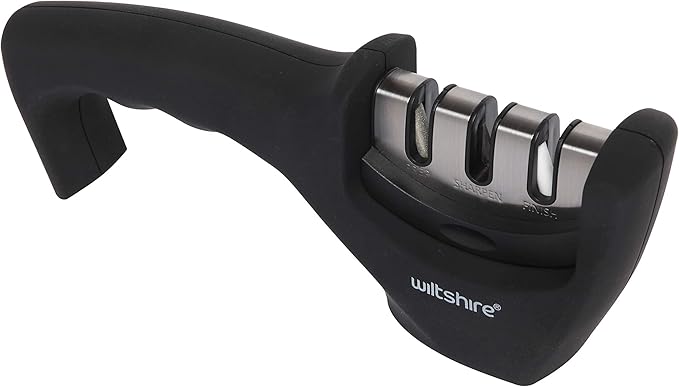
If you're busy, find cooking a chore, and have absolutely zero interest in learning how to sharpen a knife, this level is for you. Simple pull-through sharpeners belong here. They work by stripping metal or scraping the edge with coarse discs. They're fast and easy to use. This is possible only because it is a cheap knife. Soft steel can be scraped easily. But if you use this on a premium knife, you are deleting its lifespan and it won't even get that sharp. If you have a good knife, stay away from this. However, if you have a cheap knife, using a whetstone is wasting time because the edge won't last anyway. So, for cheap knives, this is actually the smart and economical choice.
Level 2: The Ultimate Tools For Chefs & Enthusiasts
.jfif)
If you are a chef or a cooking lover using good knives, the answer is ultimately the whetstone. It's all about holding the angle. We're not trying to become a master sharpener; we just want to maintain the expensive knives we bought for the purpose. Nothing on earth beats the whetstone for price, precision, and safety for your blade.
There are three main types of stones:
Water Stones: They wear down fast and need constant flattening. Plus, they struggle with really hot steel, so it's best to skip these.
Diamond Plates: They stay flat, which is great, but remember, diamond particles are glued onto the metal plate. Over time, those particles break off. Even expensive ones lose their cutting power eventually. These are mainly recommended for flattening other stones.
Ceramic Whetstones: This is the top recommendation. They are harder than most premium knives, cut fast, and wear down very slowly. The only downside is they need occasional flattening. But other than that, they are the best in terms of performance, lifespan, and value.
Level 3: The "Ambiguous" Middle Ground
.jfif)
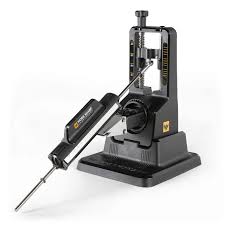
This category includes trending items like rolling sharpeners or guided systems. They give you a sharp edge without the skill, as the angle is set for you. It's easy, but they have clear downsides.
Price: They cost over $100 Australian dollars, which is quite pricey for a home gadget.
Running Cost: People overlook this, but look at the surface area. It's less than a quarter of a whetstone. Most use diamond discs which wear out much faster, and you have to keep buying expensive refills. For professional chefs who sharpen often, it is not recommended due to the high maintenance cost. But for wealthy cooking lovers who want convenience and don't sharpen daily, it's not a bad choice.
Honing rods are for maintenance, not sharpening. They're good to have, but they won't fix a dull knife.
Level 4: Proceed With Caution (Power Sharpeners)
Small belt sanders like the Work Sharp are portable and powerful, and the sand belts are cheap to replace. But be careful: these run at high speed and generate heat instantly. If you're not careful, you will overheat the edge and ruin the heat treatment of your knife. It requires knowledge to monitor the temperature. One mistake and your premium knife is ruined.
Level 5: Professional Gear For Knife Makers
Expert level machines like Tormek, water-cooled wheels, or large belt grinders are for making knives, not just maintaining them. They are big, expensive, and require a workshop. We'll skip these for today.
Conclusion & Summary
For cheap knives and the home cook: Use a pull-through sharpener. It is the most economical.
For knife makers: You know what you are doing.
For chefs and cooking lovers: The answer is the ceramic whetstone. There's no tool more balanced in price and risk management.
Don't worry about the 10 minutes soaking every single time and flattening them. Stick with it, and you'll find it's easier than you thought. In the next video, we will compare different whetstones and explain why some people don't like them and which one is the best. Please subscribe and turn on the notification. See you in the next video. Stay sharp.


