



Petty Knife Guide: Japan's Most Underrated Kitchen Blade Explained
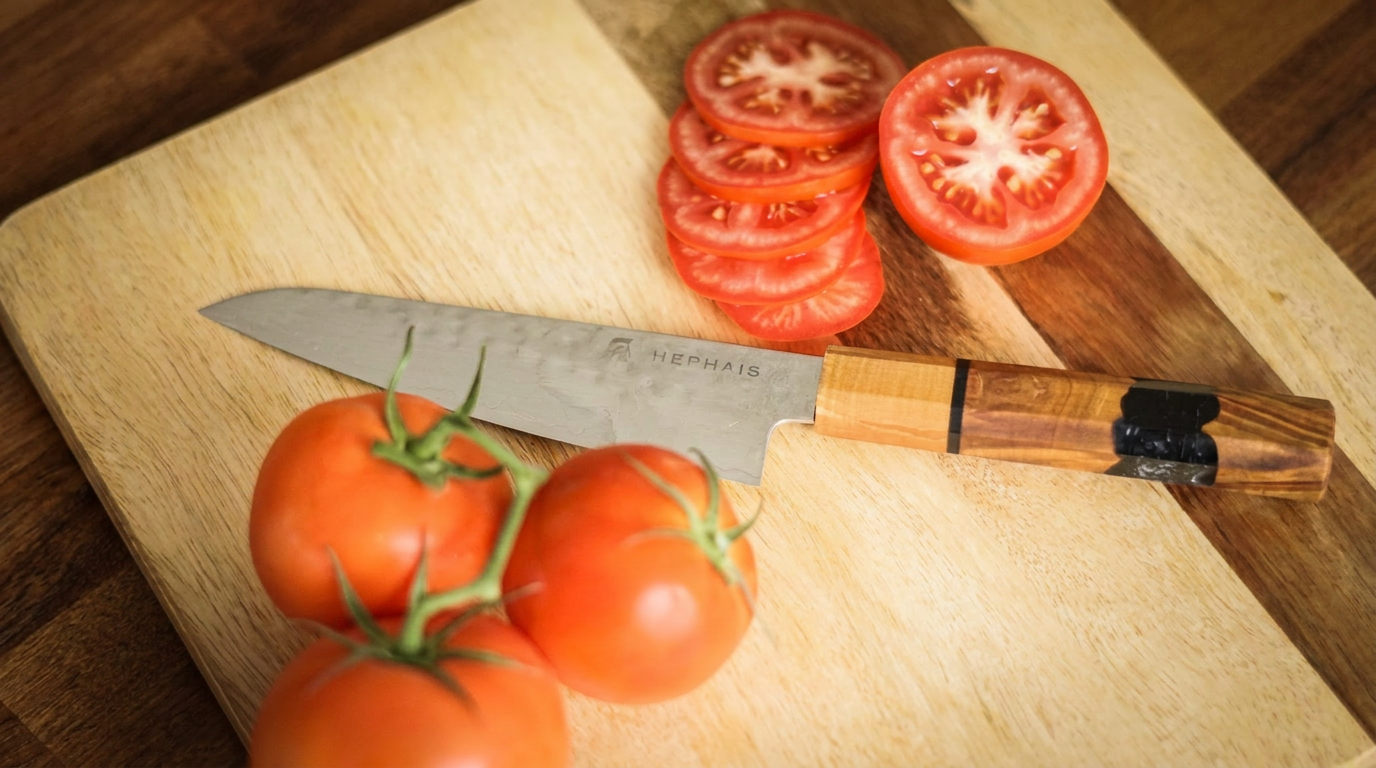
What is a petty knife and where does it fit in your kitchen?
So you've got a great chef's knife, but you find yourself reaching for it to do small, delicate jobs where it feels oversized and clumsy. That's the exact moment you realize you need a petty knife. It’s the essential second knife every serious cook should own.
The petty's place in the Japanese knife family
A petty knife is a small Japanese utility knife, typically ranging from 120mm to 180mm in length. It sits perfectly between a large Gyuto or chef's knife and a small paring knife. Think of it not as a specialist for one task, but as a precision generalist for many.
Why it's the natural second knife after a chef's knife or Gyuto
After you've spent time with your primary chef's knife, you'll notice its limitations. It's not ideal for detailed work on the cutting board or for precise in-hand tasks. The petty knife fills both of these roles perfectly, complementing your main blade without any functional overlap. It’s the partner your chef's knife has been missing.
Petty knife vs paring knife: the real difference
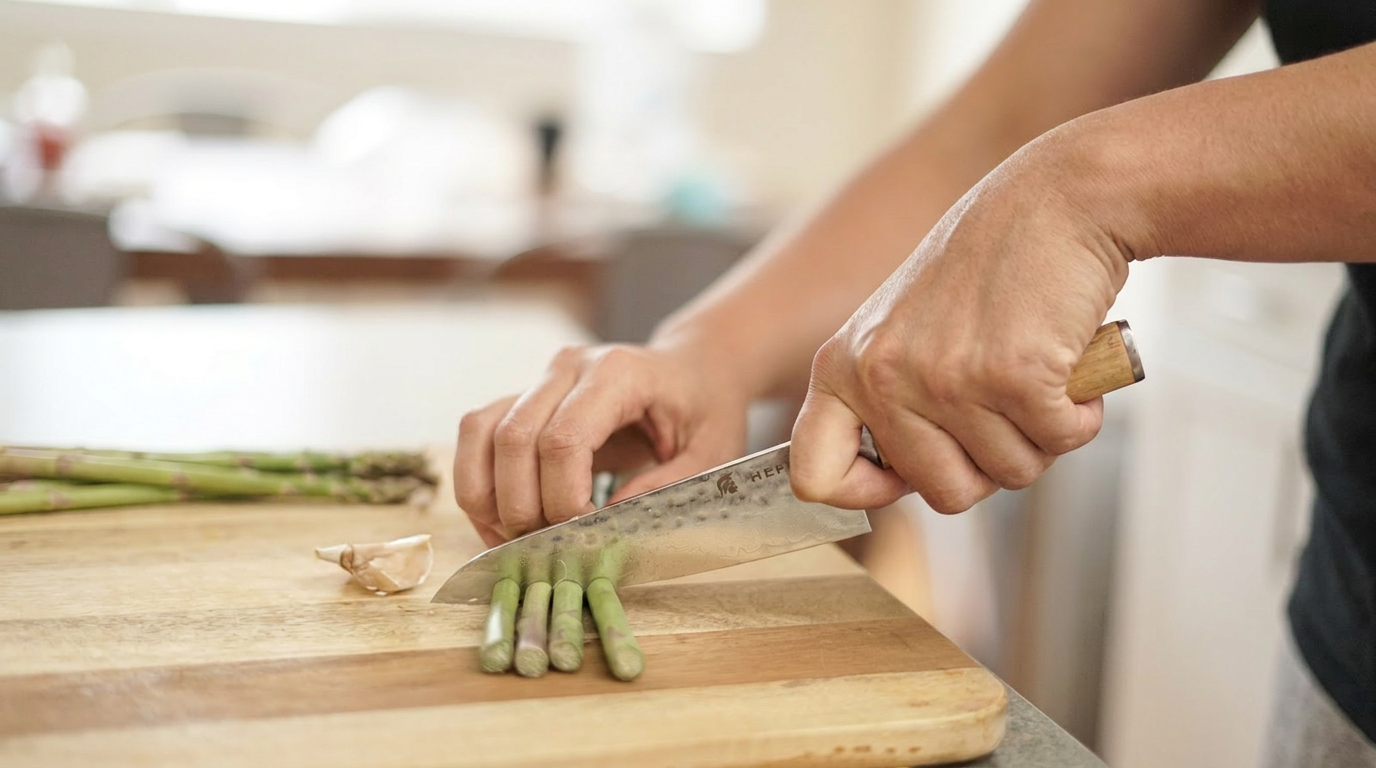
Many people confuse the petty with a paring knife, but their designs are intended for fundamentally different ways of working. Understanding this distinction is key to choosing the right tool for the job.
In-hand work vs. on-board work: why blade length changes everything
A paring knife (usually 80–100mm) is short and stout, designed almost exclusively for in-hand work. It's for tasks where you hold the food in one hand and the knife in the other, like peeling an apple or coring a tomato.
A petty knife (120–180mm) is longer than a paring knife, which gives you more reach and control for small tasks on the cutting board. It is still nimble enough for some in-hand work, but its real strength is detailed prep on the board. The Hephais Aurora Petty Knife takes this advantage further with its 35mm blade width, giving you extra stability and knuckle clearance compared to many slimmer petty knives. That is why a petty knife and a paring knife are not interchangeable — they are designed for different jobs.
When to reach for a petty, when to reach for a paring knife
Here’s a simple breakdown:
Reach for a petty knife for slicing shallots on the board, mincing a clove of garlic, trimming a chicken tender, or slicing a block of cheese.
Reach for a paring knife for peeling a potato in your hand, hulling strawberries, or deveining a shrimp held in your fingers.
What a petty knife is genuinely best at
Once you add a petty to your collection, you'll find yourself reaching for it constantly. It excels in three main areas.
Precision trimming and butchery detail work
Need to remove the delicate silverskin from a pork tenderloin or trim the fat from small cuts of meat? The 150mm petty blade gives you a level of control that a 210mm chef's knife simply can't offer.
Slicing small proteins, cheese, and charcuterie
The petty knife allows for a clean, single draw-cut through cured meats, soft cheeses, and small boneless proteins like chicken or fish. No more crushing delicate foods with a blade that's too large.
Fruit prep and garnish work
Its thin, sharp tip makes segmenting citrus fruits effortless. It's also the perfect tool for creating fine garnishes, julienning herbs, or making intricate cuts for presentation.
Choosing your petty knife: size, steel, and handle
When you're ready to buy, focus on these three factors to find the perfect petty for your needs.
150mm vs 165mm vs 180mm: which length is right
150mm: The classic size. It's compact, incredibly precise, and perfectly suited for a mix of in-hand and detailed board work.
165mm: A fantastic all-rounder that offers a bit more blade length for slicing.
180mm: This longer option approaches the versatility of a small chef's knife while retaining the thin, nimble profile of a petty.
Steel grade for petty knives: what suits detailed work
For your first petty knife, VG-10 stainless steel is the way to go. It holds a razor-sharp edge, is highly corrosion-resistant, and is tough enough for daily use—ideal for a knife that frequently comes into contact with acidic fruits and other wet ingredients. High-carbon steel can achieve a slightly finer edge but requires significantly more maintenance.
Buying a petty knife in Australia
Here’s what you can expect to find on the Australian market.
What to expect at each price tier in AUD
Entry ($60–$120): You'll find solid, factory-produced knives, often with VG-10 steel, that offer good performance for the price.
Mid-range ($120–$250): This is the sweet spot for quality, where you'll find knives with better steel, superior fit and finish, and excellent balance. HEPHAIS knives are designed to deliver this professional-grade quality.
Premium ($250+): In this tier, you're looking at hand-forged, artisanal blades from individual makers, often prized by collectors.
The best petty knives available in Australia right now
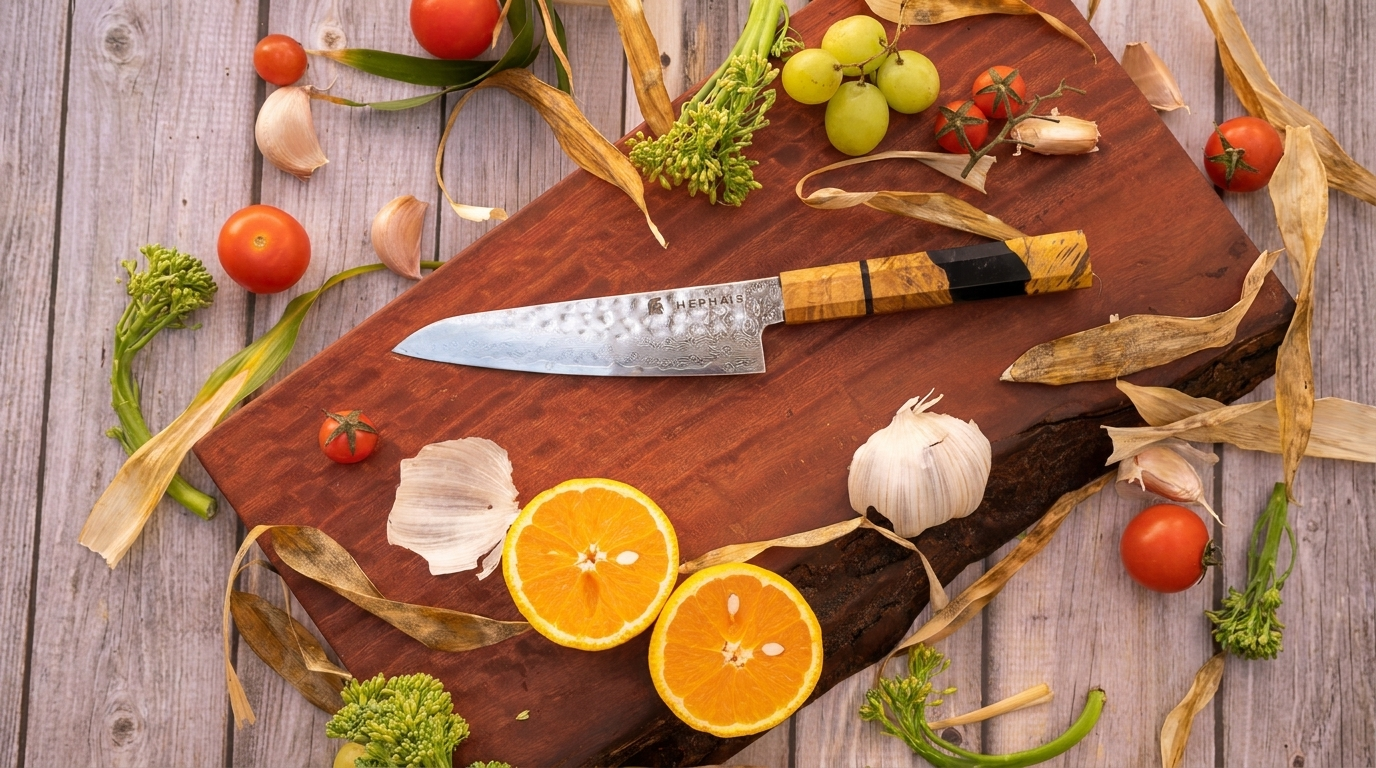
For a tool that combines professional performance with lasting value, a HEPHAIS petty knife is an outstanding choice. As a Brisbane-based, chef-designed brand and an official sponsor of the Australian Culinary Federation, we create knives built for the rigours of the kitchen. A HEPHAIS Gyuto and Petty form the ultimate two-knife kit for any cook.
All our knives come with free lifetime sharpening and 30-day returns, so you can invest in your culinary journey with complete confidence. You can explore our full range of professional knives or browse our knife collections to find your perfect setup.


