



Knife Set vs Individual Knives: What a Professional Chef Actually Recommends
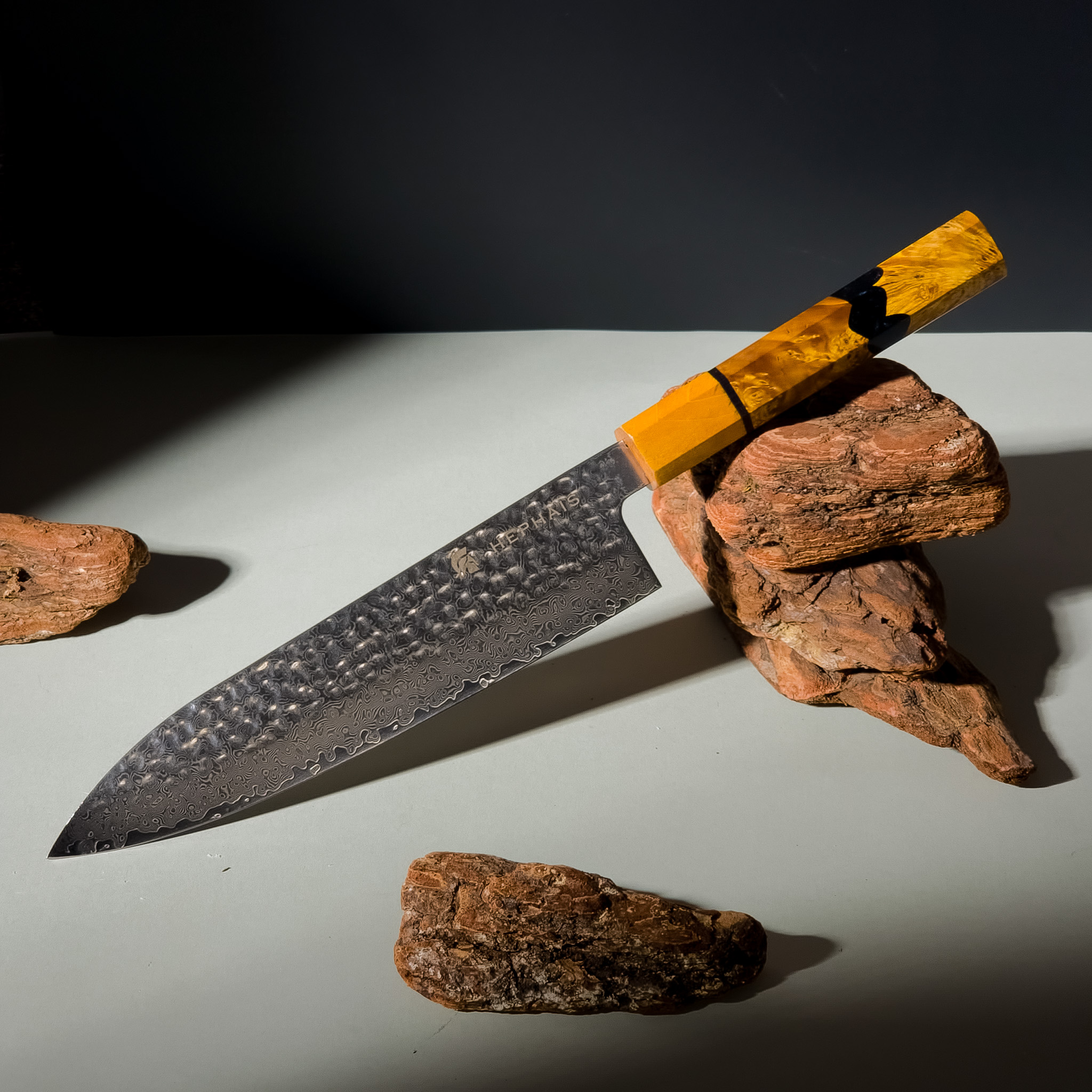
The professional chef's honest answer: sets or individual knives?
When it comes to the debate of a knife set vs individual knives, the answer is simple: buy individual knives. A knife set is almost always a bad investment designed to look good on a countertop, not to perform in a kitchen.
As a chef, I build my collection one blade at a time, and you should too. It's the only way to get the quality you deserve without paying for filler you'll never use.
Why most knife sets are a compromise you don't have to make
A $200 chef's knife sold individually is a completely different beast from the chef's knife in a $200 set. The standalone knife has all its value packed into the blade steel, the balance, and the handle. The set knife's cost is spread across a dozen other items, including the block, the shears, and knives you don't need. You're paying for packaging, not performance.
The one scenario where a set actually makes sense
There is one exception: gifting a complete set to an absolute beginner who has nothing and hasn't developed any preferences. It's a convenient package to get them started. For anyone who has ever held a knife before, buying individually is the superior path.
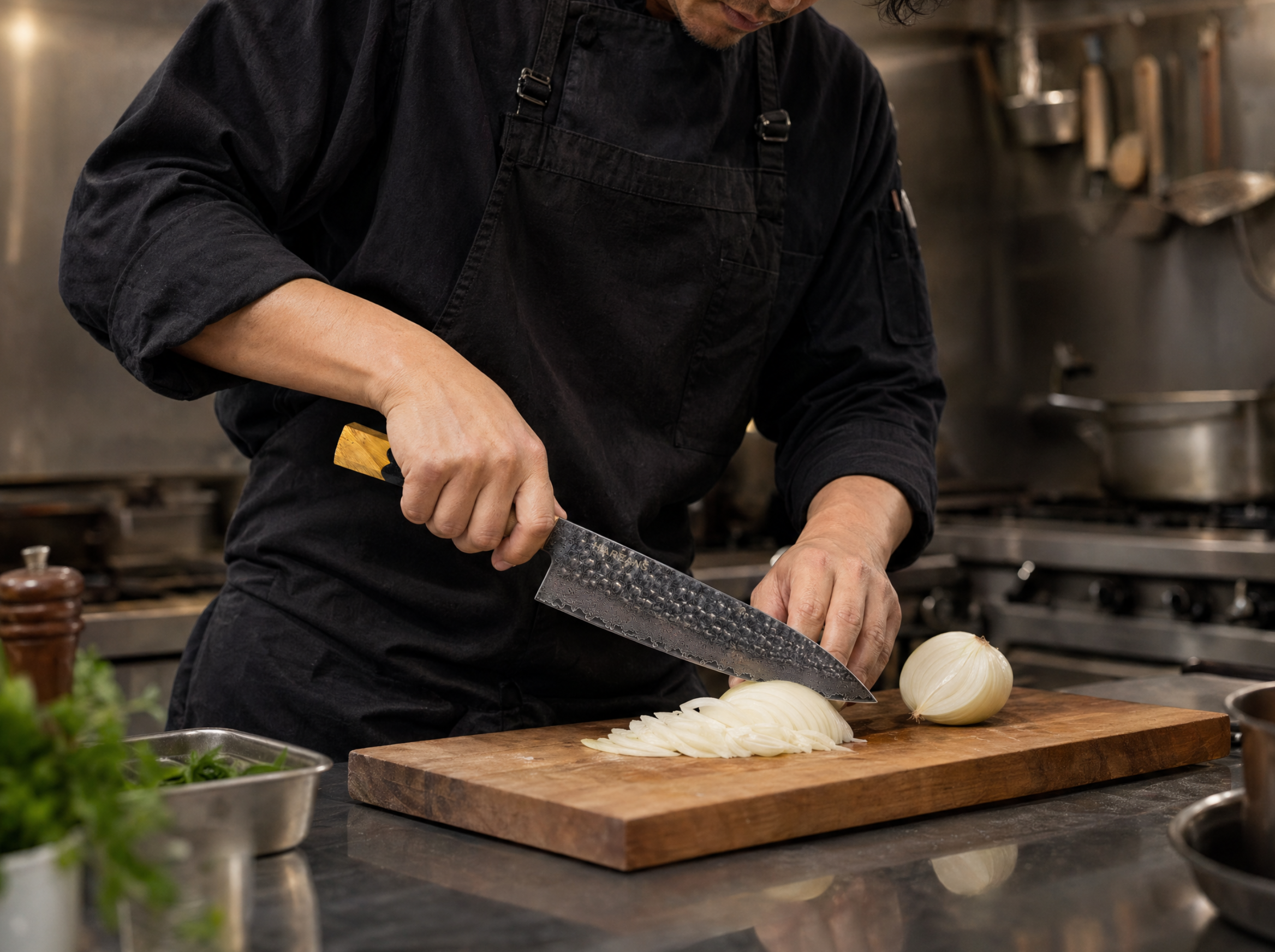
The hidden quality problem inside most knife sets
Here's the secret the big brands don't advertise. The quality of the main chef's knife in a set is often not representative of the other blades.
Why knives 4–18 in a set use different steel than the chef's knife
To hit a specific price point, manufacturers often use a premium, harder steel for the "hero" knife of the set—the chef's knife—and a cheaper, softer steel for the utility, paring, and steak knives. They know the chef's knife is what you'll test, but the quality drops off for the rest of the block. Always check the Rockwell Hardness (HRC) rating for each knife, not just a single rating for the whole set.
How to spot a set where quality is consistent (and why it's rare)
If a brand is proud of its quality, it will be transparent. Look for a specific steel grade (e.g., VG10, AUS-10) listed for all knives and an HRC rating for each blade type. You'll find this is incredibly rare in sets under $400 because consistent quality is expensive.
The block and steak knife trap: paying for storage and fillers
That chunky wooden block can add $50 to $100 to the retail price. And those eight matching steak knives? They are filler. You're better off buying a great set of four steak knives separately than paying for eight mediocre ones you rarely use. Calculate your cost per useful knife, and the value of a set quickly falls apart.
How professional chefs actually build their knife collection
No professional chef walks into a store and buys a 16-piece block. We build our kits deliberately, based on need and experience.
The first knife: why professionals start with one great blade
In culinary school, you're told to buy two knives: a solid chef's knife and a cheap paring knife. That's it. Using one primary knife for months forces you to develop real skill. You learn its balance, its edge, and what you personally like or dislike in a blade before spending another dollar.
The second purchase: what gets added next and why
After 6 to 12 months with a workhorse chef's knife, you know what you're missing. If you break down a lot of vegetables, you might add a Nakiri. If you handle a lot of crusty bread or delicate tomatoes, you'll get a serrated knife. It's a need-based addition, not a pre-emptive purchase of a dozen knives you might never need.
The full working kit: what a professional kitchen line cook actually carries
Most line cooks I know carry 3 to 6 knives to work, typically in a Premium Leather Knife Roll Bag. A typical roll includes a chef's knife, a petty or paring knife, a serrated knife, and maybe a specialty blade like a boning knife or Kiritsuke. Each one has earned its place.
The Australian home cook starter kit: 3 knives that cover everything
Forget the 18-piece set. You can handle 99% of kitchen tasks with just three high-quality knives.
The chef's knife: your workhorse for 70% of all prep
This is where you invest your money. A 210mm to 240mm chef's knife will be your go-to for almost everything. A Japanese-style Damascus blade, like the Aurora Chef Knife 220mm, offers a fine, sharp edge suited to precise cuts across proteins, vegetables, and herbs. Expect to spend $150–$300 for a quality blade that will last a lifetime.
If you want a darker, precision-focused option with more reach, the Knox Chef Knife is worth considering — matte Damascus finish, ebony handle, optimised for fine cutting work. For a more accessible starting point, the Perseus Chef Knife offers stone-washed VG10 steel with an olive wood handle at a lower price point.
The paring knife: where precision counts
For peeling an apple, trimming vegetables, or any in-hand work, a 90mm to 120mm paring knife is essential. The Perseus Paring Knife is a practical choice — well-balanced and easy to maintain. You don't need to overspend here; $50–$100 will get you a professional-quality tool that holds its edge well.
The bread knife: the only serrated knife worth owning
A good bread knife with wide, sharp serrations will glide through crusty sourdough without crushing the inside. Because they are difficult to sharpen, it's worth buying a good one from the start. Spend $60–$120, and you'll have a knife that lasts over a decade.
When buying individual knives actually costs more (and when it doesn't)
It might seem like buying three separate knives costs more than a cheap set, but you have to look at the total cost of ownership.
The real cost comparison: set vs individual over 5 years
A $150 knife set might feel like a bargain, but the soft steel will dull quickly and need replacing in a few years. A single $180 chef's knife, cared for properly, will still be performing like new in a decade. Buying quality once is cheaper than buying mediocrity three times.
Where to invest and where to save in your knife collection
Invest your money in two places: your primary chef's knife and your sharpening tools. A quality blade is useless if you can't maintain it. A good Shapton Sharpening Stone is a non-negotiable investment. Save money on your bread knife and any steak knives you might buy separately.
Knife set gimmicks to avoid when shopping in Australia
Don't fall for the marketing hype. Here are the most common tricks to watch out for.
The oversized knife block problem
Brands sell you a 16-slot block to create a sense of value and encourage you to fill the empty slots later with their other (often mediocre) knives. You end up with a huge block taking up valuable bench space.
Why most set bread knives and steak knives underperform
The serrated knives included in sets are almost always stamped from a cheap sheet of steel and can't be resharpened. They are designed to be disposable. Steak knives are rarely used enough to justify being part of a premium block.
Marketing terms that mean nothing on a knife box
Ignore meaningless phrases like "surgical steel," "German engineered," or "laser tested." These are unregulated marketing terms. Look for the three things that actually matter: the specific grade of steel (e.g., VG10), the HRC hardness rating, and the country where it was forged.
Building your collection the right way: a practical upgrade path
Ready to build a kit that will bring you joy every time you cook? Here's the professional chef's roadmap.
Starting with one knife: what to buy first
Start with one great chef's knife. Choose a blade that feels good in your hand and matches your cooking style. A Hephais Damascus knife is a strong starting point — Australian-owned, chef-designed, and a sponsor of the Australian Culinary Federation.
Adding knives strategically based on what you actually cook
After using your chef's knife for a few months, assess what you need next. If you find yourself prepping a lot of vegetables, a flat-bladed Nakiri is a great addition. If you need more precision for smaller tasks, add a petty knife. Build your collection based on your real-world cooking habits.
When you have a complete, professional-quality collection
For most home cooks, a complete collection is 4-5 knives: a chef's knife, a paring knife, a serrated bread knife, and perhaps one specialty knife like a Nakiri or Kiritsuke. That's it. This small, high-quality collection will outperform a 20-piece set every single day.


