



Kiritsuke Knife: The Expert-Only Japanese Blade That Earns Its Reputation
What is a kiritsuke knife? The original head chef's blade
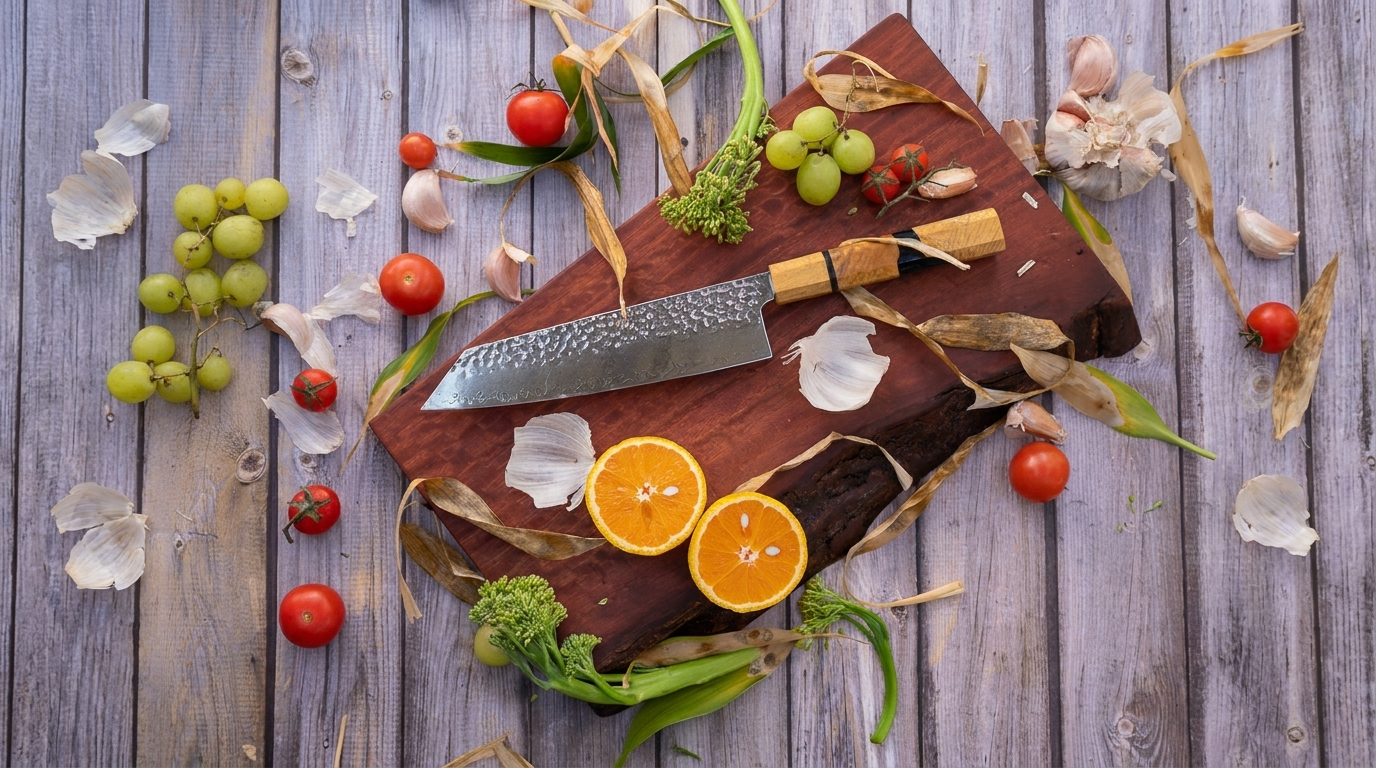
The Kiritsuke is a blade with a reputation, and for good reason. It's a hybrid, blending the long, graceful slicing power of a yanagiba (sushi knife) with the vegetable-chopping prowess of an usuba (vegetable knife). This versatility made it the traditional go-to for the head chef in a Japanese kitchen, a symbol of status earned through immense skill.
The kiritsuke's unique k-tip profile
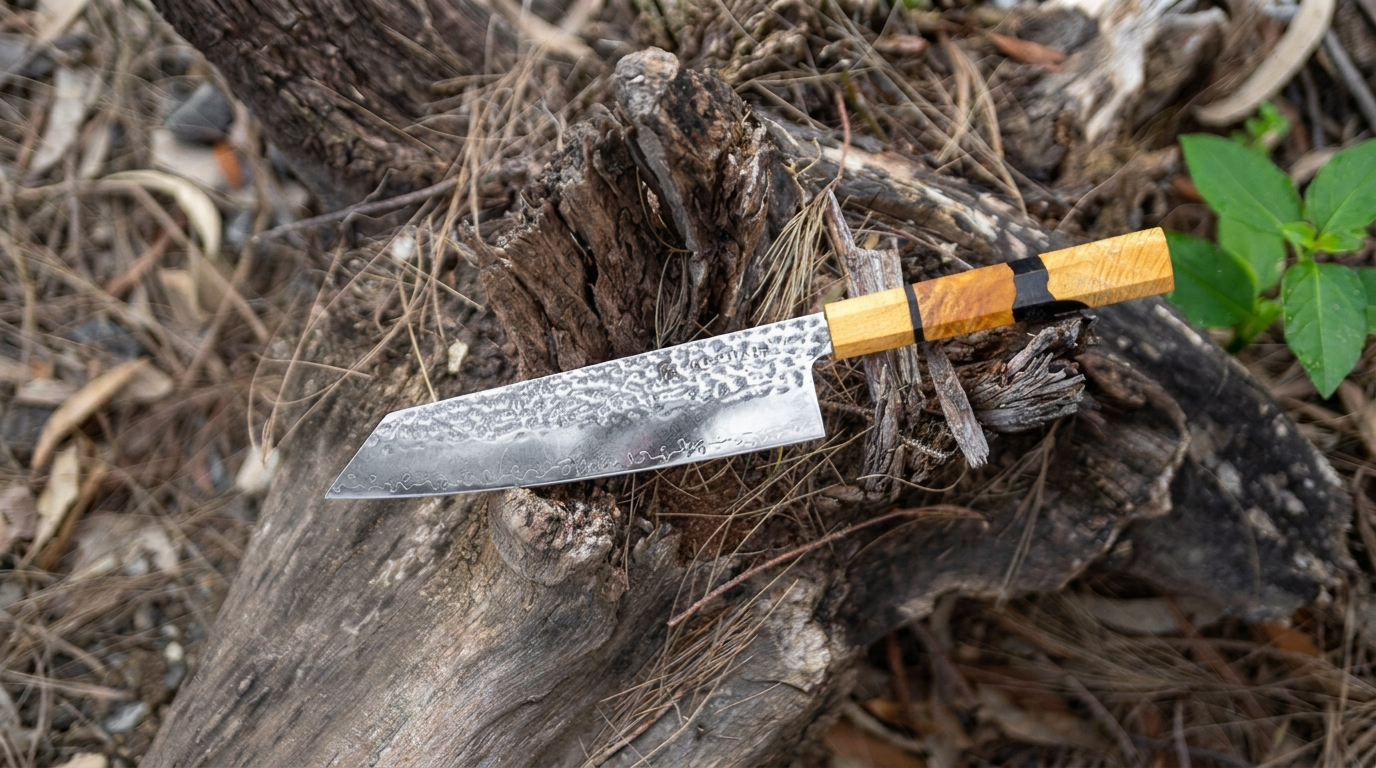
What immediately sets the Kiritsuke apart is its angular, clipped point, often called a "k-tip" or reverse tanto. This isn't just for looks. The aggressive point gives you incredible precision for detailed tip work and push-cuts that a more rounded Gyuto or Santoku tip simply can't manage. It allows for intricate scoring, brunoise, and delicate slicing tasks right at the very end of the blade.
Why it was traditionally only used by head chefs in Japan
In the strict hierarchy of a traditional Japanese kitchen, only the head chef, the itamae, was permitted to wield a Kiritsuke. This was a sign of respect for both the chef's mastery and the knife's difficulty. Traditional Kiritsukes are single-bevel, making them incredibly sharp but notoriously difficult to use and sharpen correctly. Wielding one was a public declaration of your expertise.
Traditional kiritsuke vs Western-style kiritsuke: which is for you?
Most people looking to buy a Kiritsuke don't realize there are two very different versions. Understanding this distinction is crucial before you invest.
Single-bevel kiritsuke: the traditional, demanding version
The traditional single-bevel Kiritsuke has a cutting edge ground on only one side, usually at a very acute 15° angle. This creates unparalleled sharpness but causes the knife to "steer" during cuts, which requires a high level of skill to control. Sharpening them on a whetstone is an advanced technique. This is not a knife for beginners or even most intermediate cooks.
Double-bevel kiritsuke: the accessible modern form
This is the version you'll most commonly find, and it's the right choice for almost everyone. Often called a "Kiritsuke Gyuto," it features the iconic k-tip profile on a standard double-bevel blade, like a regular chef's knife. It offers the precision of the angular tip and the striking aesthetic without the steep learning curve of a single-bevel blade. It's the perfect entry point for an Australian home cook or professional chef curious about this shape.
If you like the precision of a Kiritsuke but want something easier to use day to day, a double-bevel Kiritsuke Gyuto is the better choice for most Australian kitchens.
If you are comparing blade shapes, browse our professional chef knife range to see which profile best fits the way you actually cook.
Explore our Kiritsuke-style and professional chef knives here.
What the kiritsuke actually excels at
The Kiritsuke's unique geometry makes it a specialist tool for specific tasks.
Long slicing cuts: the yanagiba influence
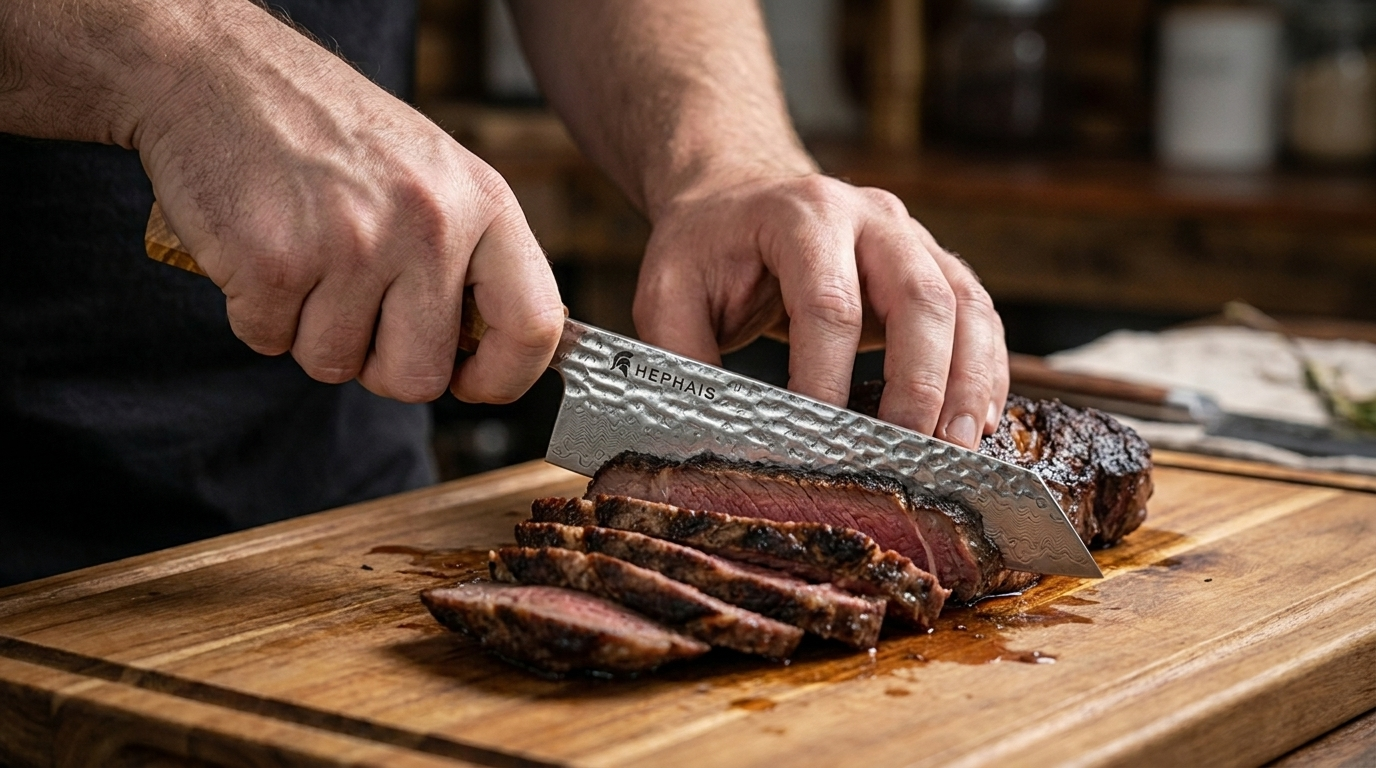
With a typical length of 240mm–270mm and a thin, flat profile, the Kiritsuke is fantastic for making long, single-stroke draw cuts. It glides through raw fish for sashimi, cooked roasts, and other proteins, leaving a perfectly clean, un-torn surface.
Vegetable and push-cut work: the usuba influence
The flat portion of the blade toward the heel makes solid contact with the cutting board, ideal for push-cutting and tap-chopping vegetables. The k-tip allows you to follow up with extremely precise cuts, making it a powerhouse for vegetable prep if you have the right technique.
Are you ready for a kiritsuke? An honest self-assessment
This is the most important question to ask. A Kiritsuke is a rewarding knife, but only if you have the foundational skills to use it effectively and safely.
The skill level this knife demands
You are likely ready for a Kiritsuke if you meet these criteria:
You have used a 210mm or 240mm Gyuto or chef's knife confidently for at least two years.
You sharpen your own knives on a whetstone and can hold a consistent angle.
You understand the difference between a rock-chop, a push-cut, and a draw-cut, and you use them intentionally.
Your knife handling and safety are second nature.
If you're still mastering basic cuts or relying on a pull-through sharpener, you are not ready. Master the fundamentals first.
What knife to master before upgrading to a kiritsuke
A 210mm–240mm Gyuto is the essential workhorse of any kitchen. Spend 12–24 months mastering this blade. If you find yourself constantly wishing for more precision at the tip for fine dicing or that the rounded belly is holding you back, you're ready to consider a Kiritsuke. For more expert advice, you can browse our other articles on knife skills and selection.
Buying a kiritsuke in Australia
When you're ready to buy, here's what to consider.
Price guide in AUD
Entry-level ($150–$200): You'll find decent double-bevel options here.
Mid-range ($200–$500): This is the sweet spot for quality, featuring excellent steels like VG-10 and beautiful finishes. HEPHAIS knives fit squarely in this category, offering professional-grade performance.
Premium ($500+): Here you'll find artisan-made, often single-bevel Kiritsukes from Japan.
What to look for in your first kiritsuke
For your first Kiritsuke, choose a double-bevel model around 240mm long with a familiar Western-style or a Japanese-style Wa-handle. A high-quality core steel like VG-10 or SG2 will provide excellent edge retention. A high-quality core steel like VG-10 or SG2 will provide excellent edge retention and durability.
View the HEPHAIS professional knife range to compare blade shapes and find the right fit for your kitchen.
As a Brisbane-based, Australian-owned brand, HEPHAIS offers chef-designed knives built for performance. We are an official sponsor of the Australian Culinary Federation (ACF), and we stand by our quality with free lifetime sharpening and a 30-day return policy. This is especially important when trying a new blade shape, giving you peace of mind to see if the Kiritsuke's k-tip technique is right for you. Not sure if a Kiritsuke is right for you? Start by comparing it with our chef knives, Santoku-style blades, and precision prep knives.
Explore the HEPHAIS professional knife range and choose the shape that fits the way you actually cook.


